Tuesday, June 11, 2013

Modern Abstract Art Painting: How to Create a Painting with Inspiration from Nature

 
Modern Abstract Art Painting


Just like authors suffer from writer’s block and need inspiration, similarly the painters too need to take inspiration from things around them. Nature has, since time immemorial, played a crucial role in inspiring artist of different eras. As a painter, you must keep your eyes open and broaden your perspective when you are seeking motivation from nature. Ideas can strike serendipitously if your mind is broad enough. For instance, even the day-to-day trees & stones around us can inspire us heavily if the person is willing to observe the patterns and inspect the more minute details.

A simple natural object like a stone can fill you with motivational ideas. The purpose of modern art is to present abstract things in an interesting and thought-provoking manner. The scope and horizon of abstract art is so vast that the painter gets full creative liberty to exercise new thoughts and innovative ideas. Here is a brief example of how to get inspiration even from the most trifle of natural objects:

Amazing Nature Artwork

Supposing you are taking an indolent stroll in your garden! You come across a tree trunk with a huge stone lying under it. If your vision is narrow, then you would hardly find anything interesting or inspiring in it. It may look as just an ordinary piece of stone and trunk. You will walk away without sparing a thought or a second look to the objects. But if your vision is broad, then you can use it to fuel your imagination.

Many modern paintings are based on such random ideas. In this scenario, you can bring out your canvas and start to paint. Instead of painting the whole landscape, you can concentrate just on the tree & the stone. These two should occupy the full space on your canvas and you can eliminate the background completely. To add a touch of reality, you should put more focus on in-depth detailing like the dirt spread over the roots or the darker underbelly of the stone. Using a variety of painting styles like impasto, you can make the work as realistic as possible.

Modern Art Painting
Modern art also lays a lot of stress on emotions. The same stone and tree can be painted in a manner that an onlooker would feel a sense of pathos emanating from them. Thus, you can come up with an outstanding work which can be your ultimate masterpiece. And the more astounding fact is that it is nothing more than just a simple stone and trunk! This is how nature can work as a motivator!

Modern Spatula Art Paintings; Spatula Wall Art can Stun your Guests


Spatula Floral Art Painting
Spatula is a popular tool which is used by most modern day painters to breathe life to their works. This flattened spoon-like structure helps to evenly spread the paint and enforce an element of uniformity. It also helps the artist in exploring various styles and to give a touch of realism to all his/her imaginations. 

However, it would be wrong to state that this genre of painting has evolved in the modern era. Even though, its prominence has come to the fore in many forms of modern art like abstract artwork. Spatula art was developed way back in the 19th century. The French painters were one of the pioneers of this form of art. They made widespread use of spatulas to elicit spontaneity and naturalness in their works. Interestingly, this tool became almost indispensable in oil painting, since it allows an artist various options to use the paints differently.

There is no fixed singular technique in this genre. It is at the painter’s discretion to use the tool the way he wants. A lot depends on the kind of impact he wants to create. Some painters may look for a more subtle shade or some may go for deeper layers. After considering all these factors, the artist may choose the amount of paint with which to load the tool.

Modern Abstract Art Painting

The great thing about a spatula is that its broad beak allows painters to play with various hues. Thus, they are free to choose between a monochrome shade and a multitude of various colors. If you wish to project a single strong shade to your work, then you can select just one color from your paint box. On the other hand, if you desire to portray multiple hues, then you can smear the tool with more colors and then create that particular impression.

Another interesting tip in this regard relates to the way the spatulas areused. One can use it in a flat manner to spread the colors or try digging it at particular corners in the canvas to conjure up a specific effect.

There is no denying the fact that spatula art is a fascinating and mesmerizing form of art. There are a number of websites which offer spatula art for sale. Since an artist enjoys a lot of liberties with this tool, the final product is quite real-looking and poignant. Any art collector would instinctively and imminently fall in love with these forms of paintings that can be bought and placed in drawing rooms.

Modern Abstract Art Paintings - Ideal for Home Decor

Cityscape Abstract Art Painting from FabuArt.com
Abstract art is a form of artwork that is done without portraying real-life images as they are. It simply uses colors, lines, shapes and textures to let off imaginations of an artist. Maybe, you will feel that an abstract painting is stupid, because it has no usual images and it will just be a fuse of colors only. Abstract artwork has had its origins in the effort for artistic independence. So it is a free and open way for a painter to express his feelings and sensations.

Abstract Art - History

Well, abstract art appears not to be the result of natural flow of things. It was evolved out by artists with a purpose to obtain some independence in exposing their creativity. The idea of artistic independence has its origins in the nineteenth century. It was largely influenced by three major art movements; they were romanticism, impressionism and expressionism.

Indeed, nineteenth century witnessed to a big turn of art history. It was when the church’s patronage over artistic freedom started to end, and private patronage started to gain impetus. The goal was to give a better living for artists. At this point of time, artists like James McNeill Whistler came up and they introduced a concept of visual sensation of paintings, rather than mere real-life depiction.

On the course of time, more artists embraced the new wave of artistic expression in their works. Later, concepts like Cubism and Fauvism made it more rich and popular. This was later called the abstract artwork. A painting of abstract art takes a viewer to a sensual level of enjoyment. It is something for a person to read from the very cognition of its creator.

Modern Cityscape Abstract Art Painting

 Deciphering Abstract Art

Every artwork imparts some charm. Even an Islamic or Chinese calligraphy may be enjoyable to you irrespective of the fact that you can’t read and make out its meanings. In this way, there is something special in viewing and enjoying an abstract painting also. It may be a blend of colors, lines and forms only, but it may arouse some feelings and sensations in you.

Sure, scenes portrayed in an abstract art will be away from what are real. But, it holds a language and meaning of its own. Sometimes, only a creator can explain their meanings. But, as a viewer, you have the right to assume some meaning to them. An artist just creates a painting from his imagination, ideas and thoughts. It is done in a way viewers can find and feel an attraction in it.

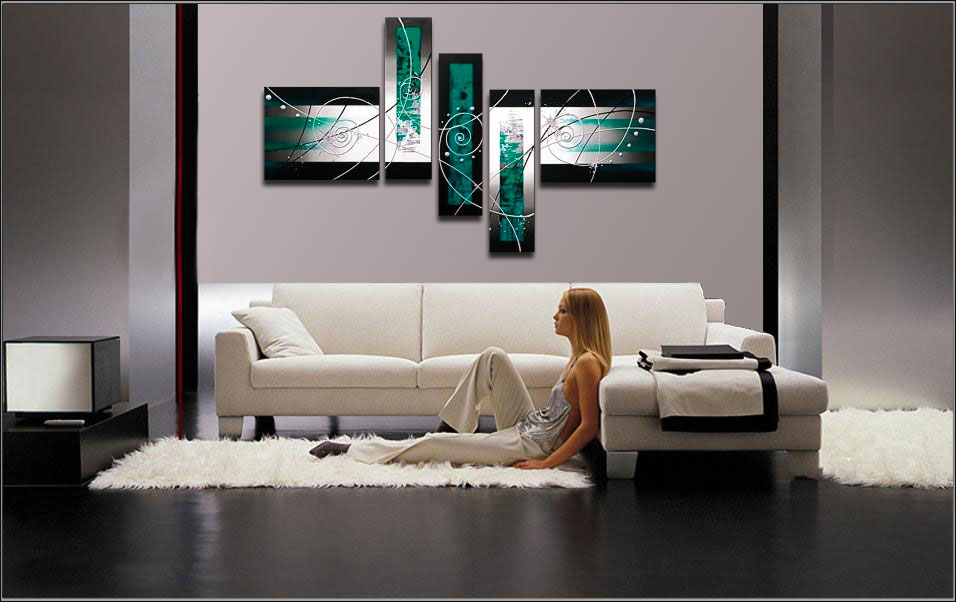
Well, mysterious meaning and color make it ideal for home decor. You can find an abstract painting that matches the mood of your room, and colors of your walls. Abstract artwork has long been used for home and office decor. Still, in the modern era, there is a craze for such paintings.

Saturday, December 22, 2012

Modern Abstract Art Paintings - How to Create a Nice Abstract Art Painting


There are basic terms and techniques that an artist should know before engaging himself in the world of art.  The better understanding of these basic terms will help a new artist develop his artistic skills that will lead eventually to the betterment of his craft. As a novice in the world of art, the following terms will be of help to you to improve your skills as an artist.

Leaving Negative Spaces
Notice most artists that paint trees do not paint the whole tree. They leave some spaces that will give the painting a more realistic look to it. In most cases, novice artist or those who are new to painting tend to fill up all the spaces in between. Most painters who teach painting have to hold the hand of their students because it is hard to control the color if you are new to painting. But after the time the artwork is finished, they will have that “ahaa” moment, to see that leaving spaces unpainted will make their painted tree as realistic as it can be.

Medium
The term medium relates to the artist’s choice of art material. There are different art materials that an artist can use as a medium for his choice of art. An artist can use one or more medium to create a unique work of art. There are many mediums for an artist to choose from. For example, some artists use charcoal, oil pastel, water color, and others. Some might even use coffee and bread as a medium for their art. The term “medium” simply is the material chosen by an artist to create a piece of art.

Highlighting
This technique can be achieved when you wipe the brush and add a lighter color then dab it on your piece of work. Such technique can be used on highlighting a part of an object on your painting that is hit by sunlight. Everything has colors in it. So, if you create your work, take note that the as you proceed with your work, put a lighter sense to it.


Dabbing
Dabbing is a technique used by some painters to create a painting. Dabbing involves the use of a flat bristle brush dipped in paint and touch the tip of the brush to the canvas or paper. To have a bolder or darker look of the color to the canvas, you can press harder the brush and to have the opposite effect to the canvas, you can press it lightly. When using dabbing in oil painting, take note not to muddy continuously different colors.

As an example, when creating bushes, you can put a darker color on the canvas then after, add a lighter color to highlight some areas of the bush to have a shadow effect on the bush. Before adding the lighter color, see to it that the darker color must not be wet before you add the lighter color. But still, you can add it if that is how you create your own piece of art. If you have intentions of creating a painting in just a few minutes, you can use acrylic paint because it dries up in just a small amount of time.

Shadows
Shadows represent the realism and solidity of an object. Most objects hit by light produce shadows. In your painting, you can have the shadows bring more drama to the painted scene. You can create shadows through adding darker colors to some areas such as putting shadows on the ground for the effect of falling leaves. The color used will only be the more darkened color of the main object.  The shadow is darker near the object then loses it as it is farther away. Using the dry-brush technique is best for the edges of shadows.


Dry Brushing
Oftentimes, this technique is used on acrylic paint. Putting a small amount of paint on the brush and brushing it to the canvas with exceptionally light strokes. Dry brushing is applied mostly on subjects that can be seen through such as sunlight, mist or fog. Thus, it needs to be done with the very lightest hand. The technique also can give an object a more withered or old look. Trying out this technique on a piece of paper is a nice idea before going into a bigger project such as trying it on a canvas. When you have mastered the technique, you can put effects on your paintings and more adding more natural elements such as sunrays, mists or fogs. Dry brushing will give new effects to your plain, simple paintings.

Making an Accurate Drawing
Most artists use grids to create an accurate image. For some instances, this method is more preferable. If you are still a newcomer to art, I wouldn't worry too much on having accuracy in your works.

If drawing landscapes, every detail must not be taken too seriously but instead take more concentration on the proportions. The setting must be proportionate with your drawn picture. Some trees might not even fit to the canvas because it is proportionate as it is to the scene.

Gesso
Is a material used as a primer to seal the surfaces of the canvas before painting the canvas with acrylics. It is mostly used to “wet” the canvas before drawing the water and sky background of the painting. A Gesso is a must have for starters and even master artists. It can be bought on art supply stores and is a great material to enhance your painting.


Scrubbing
This technique is used through adding layers or what we call layering of colors. Scrubbing brings more reality to your work. From darker colors to lighter ones, this gives the effect that your work has depth and more realistic pictures can be produced.  In order to “scrub”, dry the brush and rub the paint to soften it. This is done with bristle brush accompanied with acrylic paint.

Wash
Wash is a technique that can be used to add mist to the top of your dry paint. To produce a wash, you can just add a small amount of water to paint. Water color artist use washes effectively to their works. Layering using the technique will give good results and will add certain effects to your work. An example of this is using wash to produce mist and for the color orange, it can be used as the background of a scene such as a sunset.


Scumbling
Is done to make foliage and make the growth of plants more realistic. In order to achieve this, you must layer the paint in many directions and in an unorganized manner. It will then create dense, thick, and interesting foliage. Take note that when you scumble you don’t fill up all the spaces to have some negative spaces.

It is not simple to put all techniques and terms in only one article. The terms and techniques mentioned above are some of the most basic parts and should know on painting. More interesting techniques and terms will be discovered by you as you venture yourself in the ever growing world of art.

Thursday, December 20, 2012

How to Appreciate a Modern Abstract Art Painting


When you talk about painting, two forms can be in your mind, a painting that represents a real object and an abstract painting. Mostly, people can easily appreciate representational paintings because they easily depict very clear representation of a real object or situation and are very easy to understand.

On the other hand, abstract painting is just so complicated that it can’t be understood with just a glimpse of an eye. The viewer must have a deeper examination and he must have an open mind to see what the object in the painting truly means. But still, not all representational paintings are too narrow to represent just real objects.

Impressionists don’t just paint real representations of objects; they try to incorporate other meanings to a real object being represented in the canvas. Abstract paintings, true to their nature, are created through shapes, colors and designs that don’t specifically relate to any real objects. Most of the time viewers don’t appreciate an abstract painting because of the very complicated essence of it.


It is just like the artist has run out of ideas that he has just thrown paint all over a canvas without any point to it. But it is wrong to make such a conclusion as abstract paintings impart more ideas than representational paintings. A simple combination of colors on a canvas in a circulated motion can mean so many things to a viewer. The artwork can simply be appreciated if only by those who feel a connection with the painting.

Abstract paintings are more than what they meet the eye. An artist can connect more using his own emotion as the source of his work. To appreciate an artwork you need to look at all the possible aspects of it. Why was this made? What is the background of the artist? What is the environment of the artists as he was making this piece? Many questions and ideas must be asked before you could judge an artwork. You need an open mind and heart to truly appreciate an abstract painting.